The Black Turtleneck Reconsidered: Styling Beyond the Basic
A lot of people describe the black turtleneck as something that goes with everything. That’s not wrong. But goes with everything can also mean doesn’t stand out anywhere. A black top with jeans — no matter how well put together — tends not to leave much of an impression. Versatile and memorable are not the same thing.
How you wear a black turtleneck comes down to what you put it with. The real value of this piece isn’t that it’s a safe basic — it’s that it can set the tone for an entire look. The same turtleneck reads completely differently depending on what’s around it. That’s what’s worth understanding.
Look Analysis: The Balance of Matte Suede and a Black Turtleneck
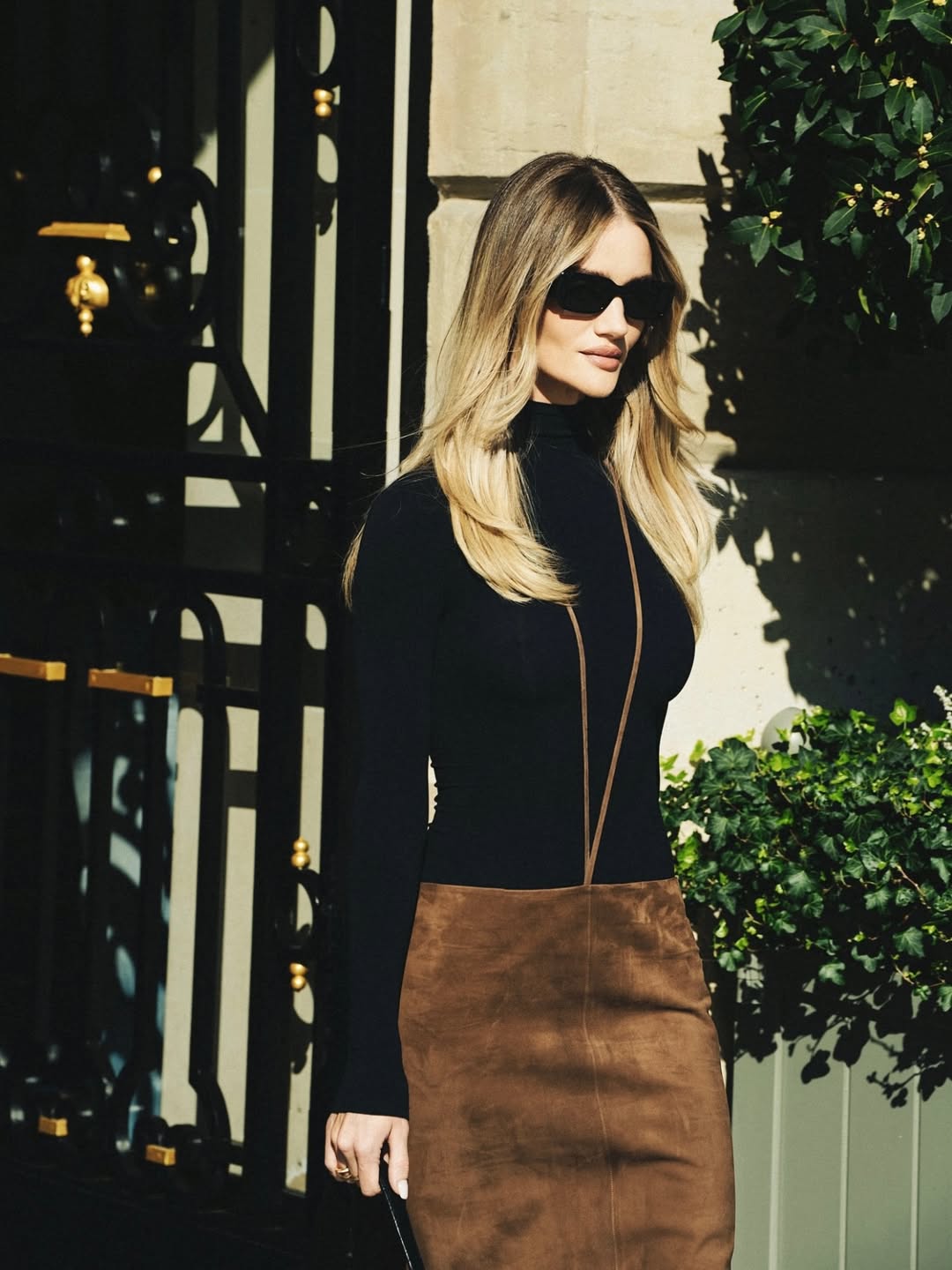
The black turtleneck appears to be a ribbed knit, fitted closely from the neck to the wrist in a way that follows the body without clinging. The high neckline elongates the neck and sharpens the face line, and the slim fit keeps the upper body clean and uncluttered. The black does two things at once — it creates a visually slimming effect on the upper body, and it makes the brown of the suede skirt read more intensely by contrast.
The suede skirt is the point of the whole look. Deep brown, somewhere between chocolate and camel, with that matte velvety texture that suede does better than anything else — it brings a warmth and depth that keeps the black from feeling cold. The texture shifts subtly depending on the angle of the light — it’s the kind of material that always looks slightly different, which keeps it interesting. The midi length falling below the knee reads as mature and elegant, and against the slim black upper half, the proportion is exactly right. The thin brown strap of the bag running vertically over the turtleneck draws the eye up and down the body, which has a lengthening effect on the overall silhouette. The turtleneck is tucked cleanly into the waistband, which creates a long, straight, unbroken H-line from top to bottom.
The bag is a black leather top handle with a structured, angular silhouette and a slight sheen. Classic in form and matching the turtleneck in color, it adds a cohesion to the overall look without drawing attention away from the skirt.
The pointed-toe heels finish the look off cleanly. The mesh material of the shoes creates a contrast against the matte suede of the skirt — it’s a detail that introduces a current, fashion-forward note into what is otherwise a very classic combination.
The accessories are deliberately minimal. A gold bangle and a ring are the only additions — enough to add warmth and a quiet luxury to an otherwise cool, dark palette. The gold tone sits naturally alongside the brown of the skirt in a way that feels tonal rather than contrasting, which is what gives it that understated richness. The sunglasses are a black rectangular frame — sharp, clean, and cool without needing to be anything more than that.
5 Essential Rules for Making a Black Turtleneck Memorable
The black turtleneck is one of those pieces that never really goes out of style — it works with almost everything and tends to make whatever it’s paired with look more considered. The risk is that it reads as flat or too safe. Here are five ways to avoid that.
1. Use texture contrast for an all-black look
When the whole outfit is black, the only way to stop it from falling flat is to vary the surfaces.
Leather is the most direct contrast. A soft knit turtleneck against a sleek leather skirt or trousers creates a tension between the two materials that gives an all-black look an edge and an urban sharpness it wouldn’t otherwise have.
Silk or satin takes it in a different direction — the subtle sheen of a silk skirt alongside the matte surface of a knit turtleneck reads as quietly sophisticated rather than stark.
2. Use the outer layer to open up the neckline
Because the turtleneck covers the neck, the eye tends to stay in the upper body. A V-shaped neckline in the outer layer counteracts that.
A tailored coat or blazer with a deep V lapel layered over the turtleneck visually elongates the neck and keeps the look from feeling closed-off or heavy.
Shirt layering works too — wear a white or blue shirt over the turtleneck with two or three buttons left open. The neck stays warm, but the look feels more open and relaxed.
3. Let your jewelry stand out
A black turtleneck is one of the best possible backgrounds for jewelry. It lets pieces read clearly and reflects light upward toward the face.
A bold gold chain worn over the turtleneck is one of the most reliable combinations in dressing — the contrast between black and gold is simple and consistently works. It also draws the eye upward, which has a lengthening effect on the overall silhouette.
A pearl necklace is the more classic option. It reinforces the intellectual, composed quality of the turtleneck without adding any visual noise.
4. Tuck it in to flatter your silhouette
Tucking a slim turtleneck into high-waisted trousers is one of the easiest proportion tricks there is.
A fitted turtleneck tucked into high-waisted wide-leg trousers makes the waist look smaller and raises the visual starting point of the legs — the proportion works even in flat shoes.
If the whole look is black, add a belt in a contrasting color or material at the waist. It defines the waistline clearly and stops the silhouette from reading as one unbroken vertical line.
5. Match the hairstyle to the neckline
The hairstyle matters more with a turtleneck than with most other tops.
An updo — a high bun or a gathered style — exposes the neck and immediately removes any sense of the turtleneck feeling restrictive. The face looks smaller, the neck looks longer, and the look feels more intentional.
A sleek, pulled-back style reinforces the clean, considered quality of a turtleneck look and amplifies the more intellectual mood it naturally carries.
Final Checklist: Elasticity and Knit Weight
One last thing: when choosing a black turtleneck, pay attention to the elasticity at the neck and the weight of the knit. A thick fabric under a jacket can add bulk and work against the silhouette. For layering, a fine, close-knit gauge is the better choice — it keeps the line clean no matter what goes on top.
No responses yet