The Oversized Blazer: How to Wear It Instead of Being Worn by It
An oversized blazer being large doesn’t automatically make it easy to wear. There are moments when it feels less like you’re wearing the jacket and more like the jacket is wearing you. The shoulder seam slides off, the sleeves cover the hands, and the overall impression is just a large piece of fabric draped over a body. That’s usually why something that looked good in the store feels different once you’re actually in it.
The volume of an oversized blazer is the point — that’s what makes it interesting. But for that volume to work as part of a look rather than against it, something else needs to support it. It could be the silhouette of the bottom half, the fit of the inner layer, or a detail like a belt or a strap. The more volume the blazer has, the more precise the rest of the look needs to be.
Preserving the volume while still creating a silhouette — that’s what oversized blazer styling actually comes down to. And the way to do it is simpler than it sounds. Here’s how.
Look Analysis: Power Shoulders and Sophisticated Color Blocking
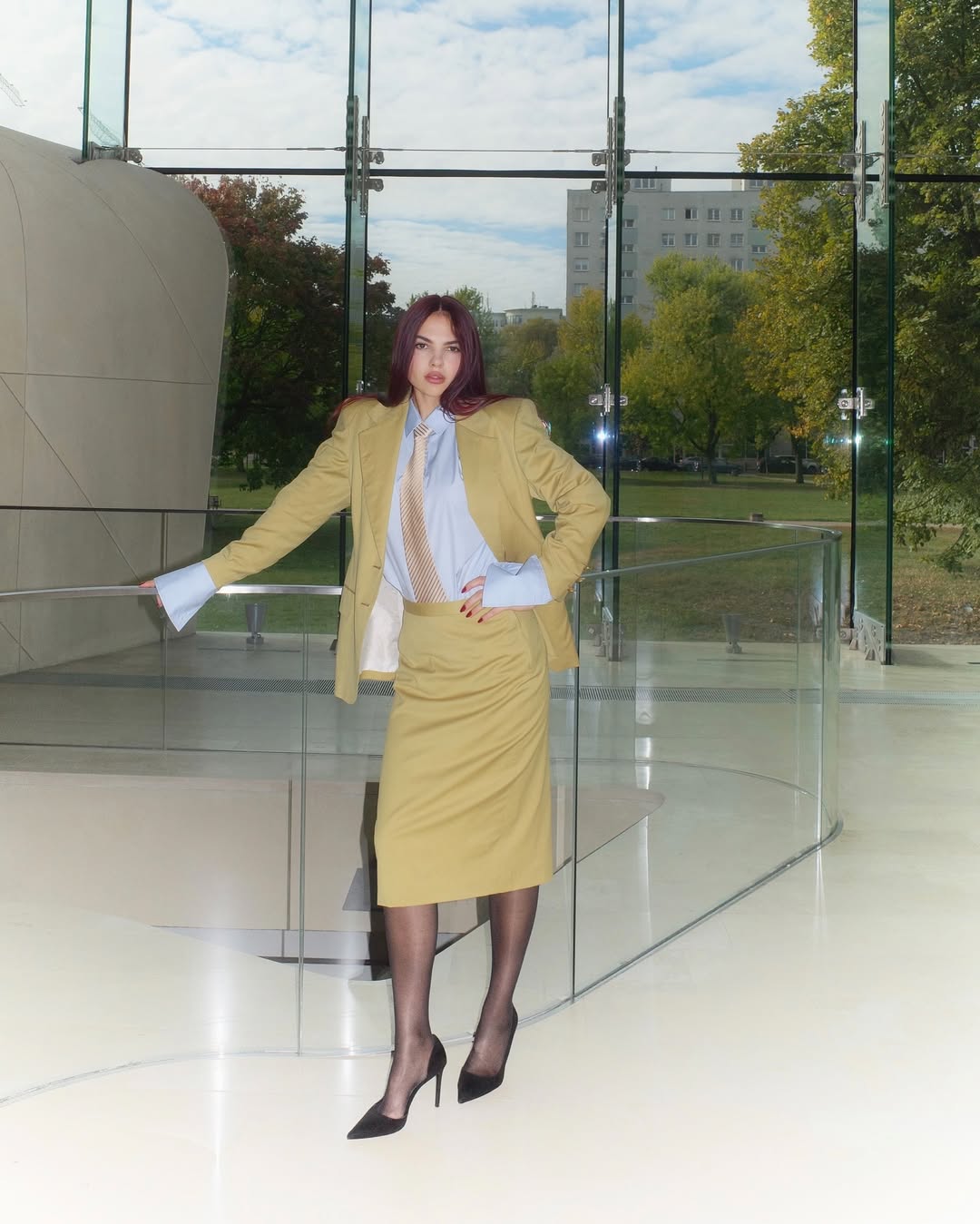
The yellow oversized blazer leads with a power shoulder silhouette — structured padding that makes the shoulder line sharp and defined, and gives the whole look an immediate authority. It references the power dressing of the 1980s while reading as entirely current, which is the balance that makes it interesting rather than costumey. The length is generous, falling just past the hip, and the oversized fit drops naturally from the shoulder without feeling sloppy. The color is doing its own work too — this isn’t a flat, straightforward yellow. It’s a deep mustard with a golden warmth to it that brings life and heat to what could otherwise feel like a cold, corporate silhouette.
Underneath, a light blue dress shirt. The classic shirt form is intentional — the cuffs peeking out from beneath the blazer sleeves add a layered quality that makes the whole thing feel considered rather than simply two pieces worn together. The contrast between the warm yellow and the cool blue gives the look a tension and vitality that a monochrome approach wouldn’t have, and because both colors are relatively muted in saturation, the overall impression stays refined rather than loud. The diagonal stripe tie in beige and gold tones introduces a masculine reference point while simultaneously bridging the colors of the suit — and worn the way it is, not tightly knotted but loosely draped, it adds a classical elegance that reads as deliberate rather than borrowed.
The skirt is mustard yellow — the same fabric as the blazer, a perfect tone-on-tone match. The midi length covers the knee and provides a calm, grounded base that anchors the volume of the blazer above it. In an oversized look where the upper half carries significant visual weight, the slim, clean fall of the pencil skirt is what keeps the proportion from tipping over. The contrast between the generous fit of the blazer and the close silhouette of the skirt below is what gives the look its drama — wide on top, slim below — and that contrast is what makes it feel simultaneously powerful and feminine.
The sheer black tights complete the lower half. The semi-transparent fabric makes the legs look longer and more uniform, and the delicacy of the sheer texture reinforces the femininity of the look in a way that opaque tights simply wouldn’t.
The black pointed-toe stiletto heels extend that line from the tights all the way to the floor. The decision to go with a stiletto rather than a chunkier loafer or flat shoe is a significant one. The loafer would have kept the look in more neutral, androgynous territory. The stiletto introduces a sensuality that sits in direct contrast with the structured, masculine references of the suit.
Editor’s Styling Notes
The Art of Layering Let the shirt cuffs and tie take center stage. These small masculine tailoring details are what elevate the look beyond a basic suit.
Color Blocking Instead of playing it safe with beige or grey, bring in a combination with real personality — like yellow and blue. The contrast between warm and cool tones is what gives the palette its energy and depth.
Sharp Finish Keep the lower half unified in a darker tone and opt for a pointed toe. Everything below the waist should sharpen and elongate the silhouette — that’s where the proportion gets its final polish.
5 Essential Rules for Mastering the Oversized Silhouette
The oversized blazer has a specific kind of appeal — that borrowed-from-someone-else quality, roomy and relaxed in a way that feels effortlessly cool. The challenge is keeping all that volume from wearing you instead of the other way around. Here are five ways to make it work.
1. Slim everything down below (Volume Contrast)
When the jacket is big and the shoulders are strong, the bottom half needs to go in the opposite direction. It’s the most reliable formula, and it works every time.
Biker shorts or leggings under a longer blazer create a contrast that makes the legs look significantly leaner than they actually are. The volume up top and the close fit below produce an optical effect that’s genuinely flattering.
Layering a slim leather jacket underneath the oversized blazer is a more advanced move — the contrast between the structured softness of the blazer and the harder surface of the leather creates a visual depth that makes the whole look feel more considered and more dimensional.
2. Define the waist with a belt
Cinching an oversized blazer at the waist is the single most transformative thing you can do with it. The proportion shifts immediately.
A wide belt worn over the jacket, positioned slightly above the natural waist, turns a boxy silhouette into an X-line. The legs look longer, the waist looks smaller, and the blazer suddenly feels intentional rather than borrowed.
A belt bag achieves a similar effect with the added benefit of being practical — it marks the waist, adds a focal point, and reads as a deliberate styling choice rather than a functional afterthought.
3. Contrast the texture (Material Mix)
Hard tailoring needs something soft to push against. The inner layer is where that contrast happens.
A slip dress or anything in silk worn underneath a structured blazer creates a tension between the two materials that feels genuinely compelling. Rough against delicate, structured against fluid — the combination works because the two elements are so different from each other.
A baby tee worn underneath with the blazer left open is a simpler version of the same idea. A fitted layer peeking out from an open jacket balances the volume and keeps the look light and effortless.
4. Roll the sleeves (The Cuff Detail)
The wrist is the narrowest part of the arm, and exposing it changes how heavy the jacket reads.
Push the sleeves up to around the elbow — casually, not neatly. The exposed wrist lightens the whole silhouette and makes the oversized fit feel more relaxed and less overwhelming.
Add a watch or stack some bracelets after rolling the sleeve. The accessories draw the eye to a specific point on the arm, which stops the jacket’s size from being the only thing the eye registers.
5. Let the shoes set the tone
The shoe choice with an oversized blazer determines the entire genre of the outfit.
Chunky sneakers remove the formality of the blazer entirely and push the look into street territory. The contrast between the tailored jacket and the utilitarian sneaker is exactly what makes that combination feel cool rather than sloppy.
A pointed-toe heel does the opposite — it sharpens the look from the bottom up, and even the most oversized fit reads as polished and powerful when the footwear is this precise. That’s the combination that tips the whole thing into business chic.
Pro-Tip: The Importance of Shoulder Padding
One last thing: when you’re shopping for an oversized blazer, check the shoulder padding. A jacket with the right amount of structured padding holds the shoulder line in place and stops the whole thing from drooping or collapsing — and that structure, counterintuitively, makes the face look smaller by providing a strong frame around it. It’s easy to overlook when you’re trying something on, but it’s one of the details that makes the biggest difference in how the jacket actually wears.
No responses yet